An important note before I start
Firstly, I am not medically trained, and nothing I share here constitutes advice. It is simply an honest account of what I did, why I did it and – as far as I can tell – what effect it had. If you are concerned about your own bone health or any other aspect of your health, please consult an appropriately qualified practitioner. Secondly, a word about the scan results themselves. Had my scores shown less improvement – or even a decline – this post would have focused on why DEXA scans may not be as reliable as we tend to assume. My being pleased with my results doesn’t change that fact, and I’ll come back to it another time. For now I’m treating the numbers as an encouraging indicator that I’m moving in the right direction, rather than as definitive proof of anything.
With that said – here’s what I did.
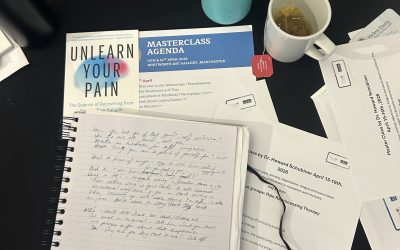
Bones for Life – the movement programme that convinced me to give up yoga
If you’re familiar with my work you might expect me to start by presenting my DEXA results as proof of the efficacy of Bones for Life®, the functional movement programme I teach, in improving bone density.
I’m not going to – and not just because of the reliability questions I’ve just mentioned.
When I first discovered Bones for Life (BfL), just weeks after my diagnosis, I was naturally hoping it would help me strengthen my own bones. I liked what I read – and more importantly, what I felt in my body when practising – and I jumped at the opportunity to spend the next two years deepening my knowledge and training to teach it. In fact, I was so convinced that I stopped practising and teaching yoga postures altogether in favour of this new approach. Since then, as I’ve continued to practise, study and teach the programme, my understanding of what it can – and what it probably can’t – do has evolved considerably.
Research into whether BfL can directly improve bone density is limited, though a 2024 pilot study was encouraging. At the same time, the subtle weight bearing movements we explore in BfL are a long way from the high-intensity, progressive resistance training now widely recognised as the most beneficial exercise for building bone mass (something I’ll come back to in my next post). However, what both the paper mentioned above and one from 2017 consistently showed was that the vast majority of participants noticed improvements in body awareness, balance and overall mobility – attributes that are key to reducing long-term fall risk. Furthermore, improvements were observed whether people were already highly active or dealing with limited mobility at the start of the research.
So how can BfL help if you have been diagnosed with osteoporosis? For me, it has been genuinely transformative – not because of what it may or may not have done for my bone density, but because of how it has changed the way I move through the world. I notice much more quickly when I’m out of alignment and I have the tools to address it. When my lower back grumbles I know exactly how to ease and release it so I can get on with my day. When I’m sitting, standing or walking and I notice my posture could be better, I pause, use what I’ve learned and continue with greater ease and confidence. When I stumble, I am much more likely to regain my balance without giving it a second thought. And when I do any more intense forms of exercise, what I’ve learned from BfL gives me the confidence to trust that my body is appropriately aligned and not at risk of injury.
Without doubt BfL has improved my day-to-day posture and my stability which in turn has increased my chances of standing on my own two feet – literally and metaphorically – in the decades ahead. I’ll say more about how BfL can support other forms of exercise in my next post. If you’re curious about exploring it for yourself, you’ll find more information and details of my online courses and retreat days here.
HRT – a decision I didn’t expect to revisit
By the time I was diagnosed with osteoporosis at 56, I had already been post-menopausal for a decade. I’d been offered HRT in perimenopause and refused it on principle – and, unusually for me, with no research. But faced with a significant, long-term diagnosis, I realised it was time to look at this properly.
Over the weeks that followed I went into full-on research mode. Eventually I made two decisions: no, for now at least, to the pharmaceutical treatments offered by the NHS for osteoporosis – and yes to replacing the sex hormones that promote the development and maintenance of bone mass, and that menopause had depleted.
I was fortunate to have a GP who was supportive. I started on HRT – oestrogen gel and progesterone capsules – in early 2023. Some eighteen months later, having paid privately for a DUTCH hormone profile test that revealed low testosterone levels, my GP agreed to add this to my prescription. (Many people don’t realise how important testosterone is for women – we need it for bone health too, not just for libido and energy.)
Having spent more than a decade avoiding pharmaceutical interventions unless absolutely necessary, it took a while to get used to incorporating all of this into my daily routine. And since I wasn’t taking HRT for menopause symptoms – they were long gone by the time I started – doing so had no noticeable impact on my quality of life. Nonetheless the complete absence of any negative side effects reassured me that I had made the right choice for my body. I certainly have no plans to stop.
Nutrition – finding a path through the noise
When I broke my wrists I genuinely believed I was fitter and healthier than I’d ever been. I’d finally recovered from the burnout and Chronic Fatigue Syndrome that had brought my first career to an end a decade earlier, I was practising and teaching yoga several times a week and walking my dog daily. My diet had settled into what felt like a sustainable and enjoyable pattern – predominantly plant-based, with cheese.
The osteoporosis diagnosis sent me back into a world of confusing and contradictory information. Is dairy beneficial or does it leach calcium from your bones? Should we be eating oily fish three times a week or avoiding it due to heavy metal toxicity? Leafy greens are high in calcium – but spinach contains oxalates that can block absorption. And that’s before we even start talking about supplements.
If any of this feels familiar, my honest advice is to do what I did and work with a professional rather than trying to research your way to an answer alone. An accredited nutritional therapist and/or functional medicine practitioner can recommend tests and prescribe supplements where needed. Two BANT-accredited practitioners I have worked with myself and can recommend are Jacqui Mayes and Bex Prade. If you’re looking for something lower key – confident food choices, real-life guidance and hands on kitchen tips – a nutrition coach like Mel Conder may be what you’re looking for (I like her approach so much we started running retreats together in 2025).
For my own part, the biggest – and scariest – realisation was that my preferred diet wasn’t giving me nearly enough protein. It is possible to eat a high protein plant-based diet, but it’s hard work! I immediately began eating more tofu (I’d previously avoided soy-based products) and gradually reintroduced a range of animal products – fish, meat, more dairy – prioritising organic and free-range sources wherever possible. I also started taking supplements (the exact combination varies, but currently includes collagen and a good-quality over-50s multivitamin). And – perhaps the most unexpected discovery of all – I learned to love prunes, which turn out to be surprisingly good for your bones due to their high boron content.
In my next post I’ll be talking more about movement – specifically my shift from yoga to something I swore for thirty years I would never do, and where BfL fits into all that. If you know me well, you might be able to guess what’s coming.